

How to use Logo Carousel in Oxygen
Place a logo showcase you built with Logo Carousel into any Oxygen page, using the Logo Carousel element.
Oxygen has its own editor, so Logo Carousel's blocks don't appear in it directly. Instead, you save your showcase as a Saved Template (a reusable copy of a logo showcase you designed in the block editor) and add it with Logo Carousel's Oxygen element. It previews live, and it stays in sync: edit the template once and every Oxygen page that uses it updates.
Oxygen Classic
The Logo Carousel element is built for Oxygen Classic (the 3.x and 4.x versions). On a newer Oxygen that doesn't list the element, you can still show a template with a shortcode. See Prefer a shortcode?
You can do this in 2 steps
- Get a Saved Template readyTurn on the Oxygen integration and make sure you have a published template.
- Add it in OxygenAdd the Logo Carousel element and pick the template.
Before you start
- Logo Carousel (free or Pro) and Oxygen (Classic) are both installed and active.
- The Saved Templates module is on. It is by default; see Modules.
- You have at least one published Saved Template. New to them? Create one first.
Part 1: Get a Saved Template ready
Step 1: Turn on the Oxygen integration
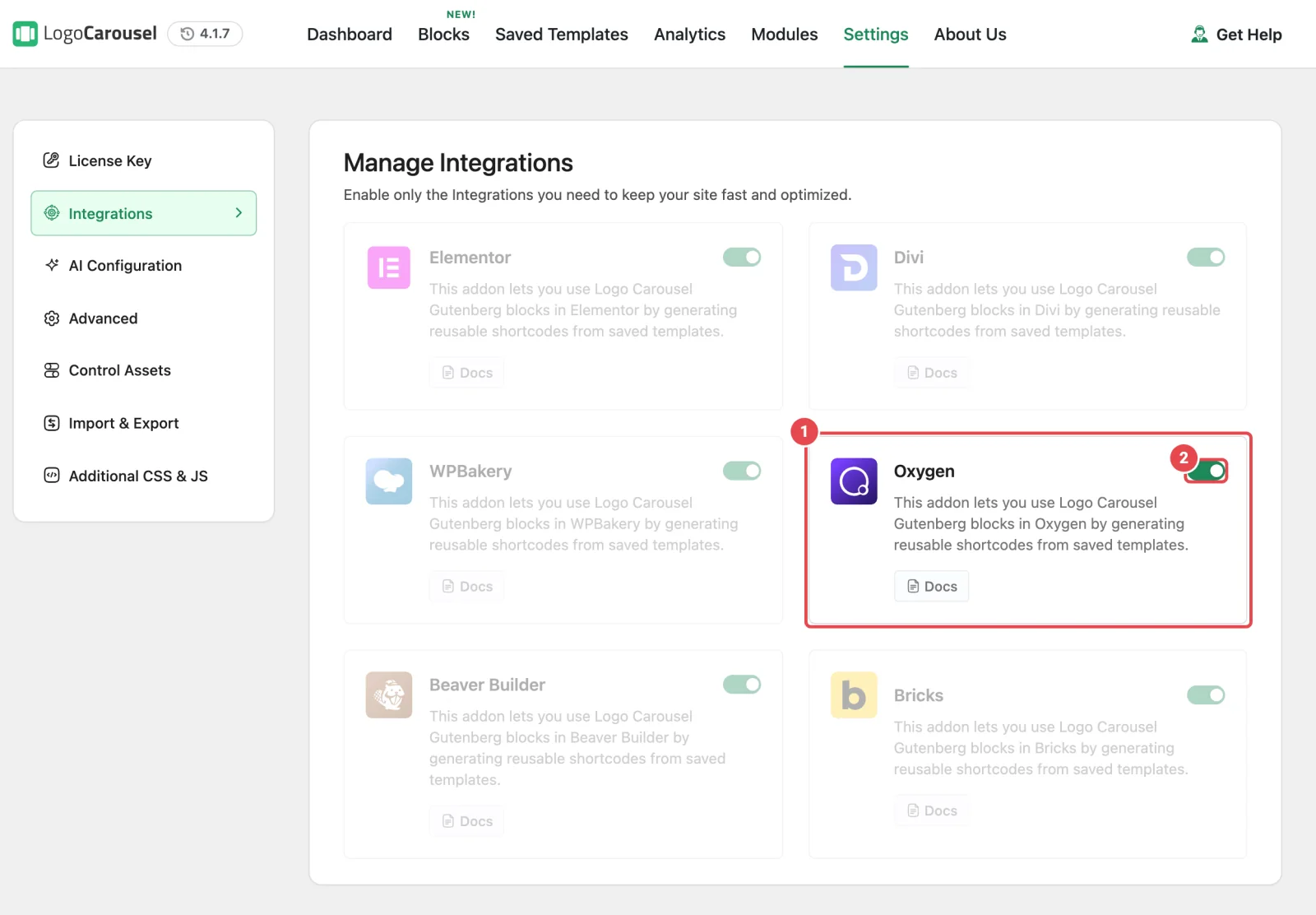
- In your WordPress dashboard, go to Logo Carousel → Settings.
- Click Integrations in the left-hand menu.
- Make sure the Oxygen switch is on.
It's on by default, and it saves as soon as you flip it.
Step 2: Check your template
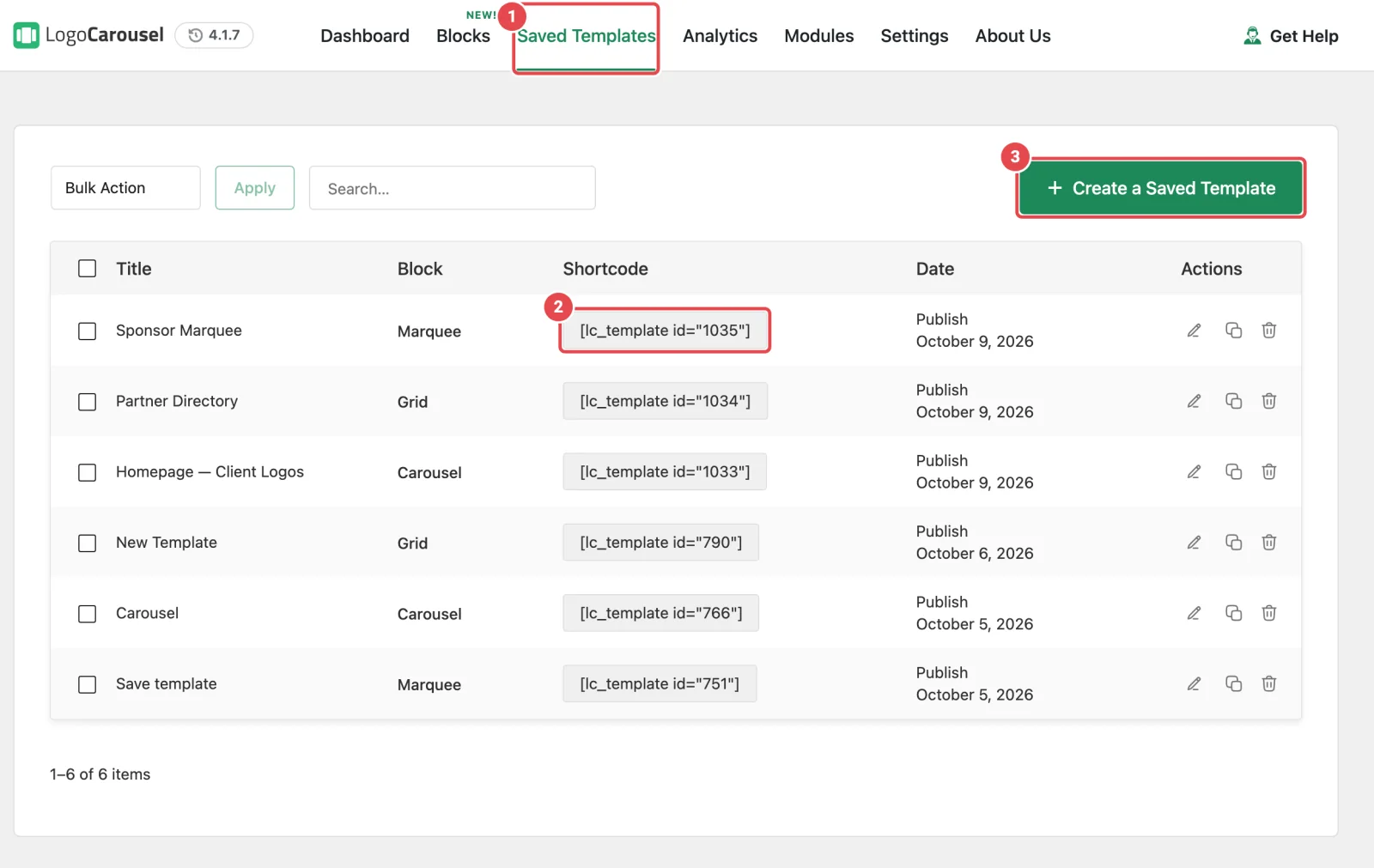
- Go to Logo Carousel → Getting Started and click the Saved Templates tab.
- Find the template you want to show. Only published templates appear in Oxygen.
- Optional: click its shortcode to copy it, for the shortcode route.
Part 2: Add it in Oxygen
Step 3: Open your page with Oxygen
- Go to Pages and hover over the page you want the showcase on.
- Click Edit with Oxygen in the row of links under its title.

Step 4: Add the Logo Carousel element
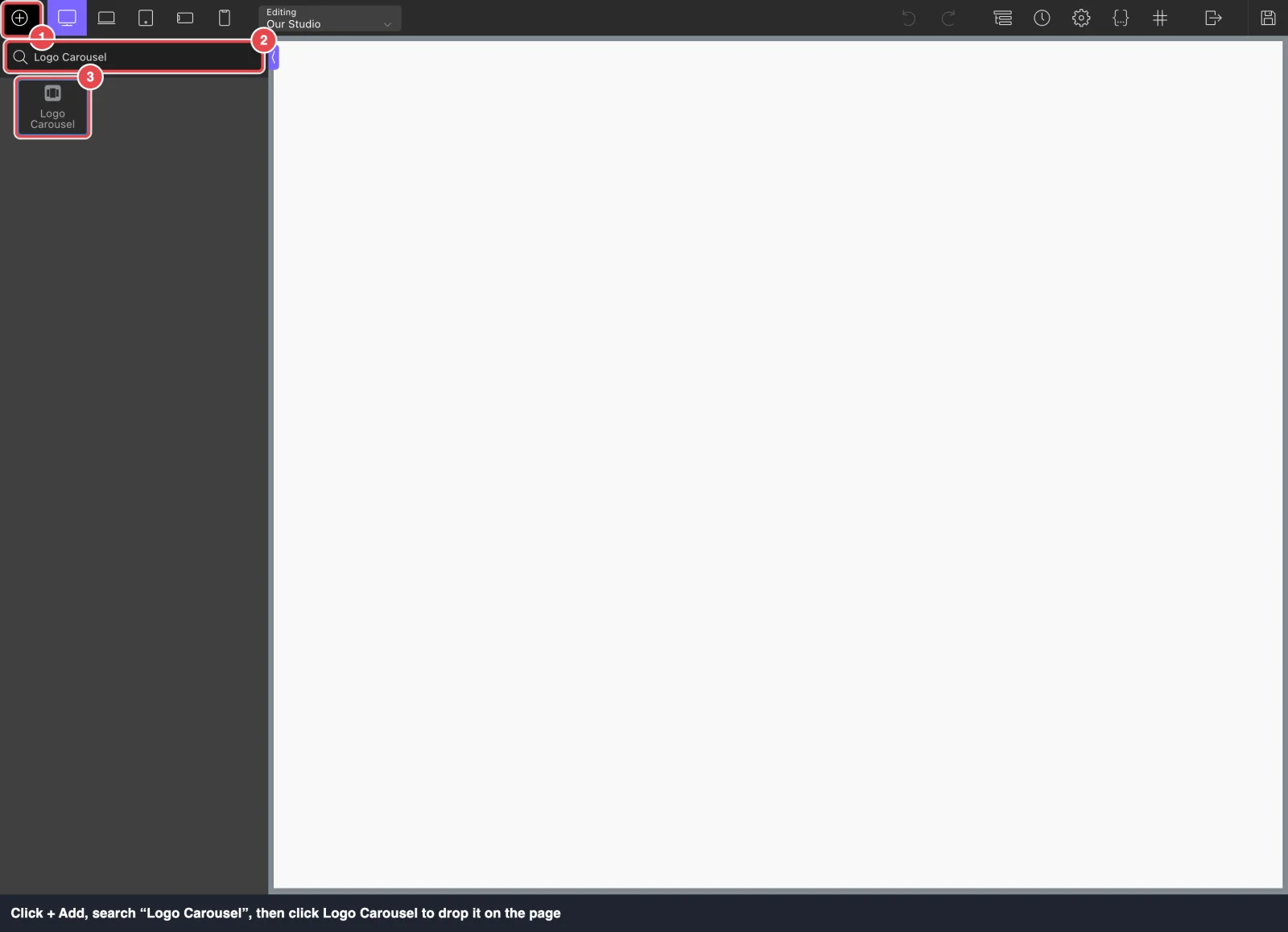
- Click + Add in the top-left corner.
- Search for Logo Carousel. Without searching, you'll find it under Basics → Other.
- Click Logo Carousel. It drops onto the page straight away.
Step 5: Pick your template and save
- The element's settings open on the left. Open Saved Template and choose your template. The showcase appears on the canvas.
- Click Save in the top-right corner.
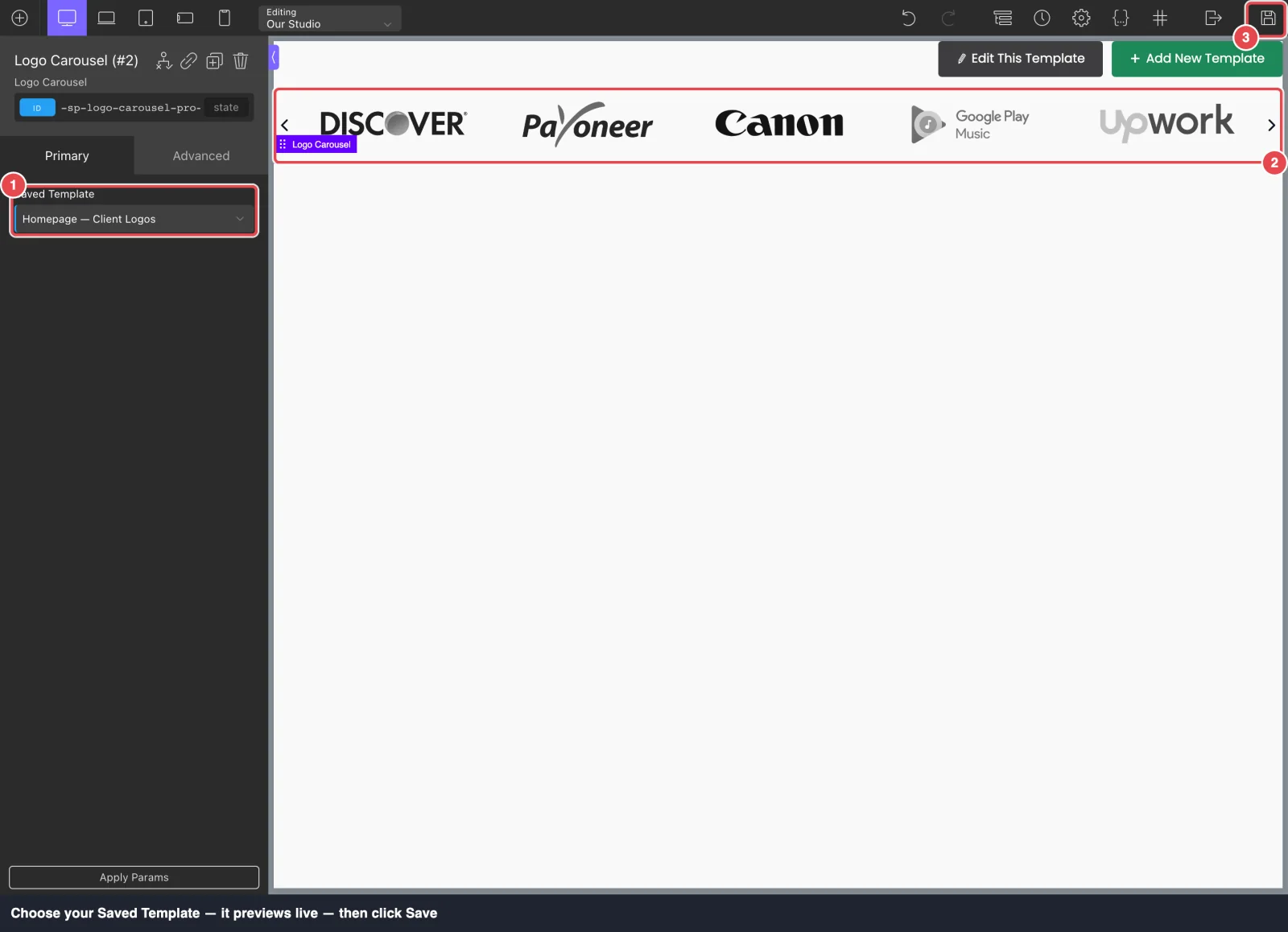
The element rebuilds as soon as you pick a template, so you don't need an extra apply step. If the page is still a draft, publish it from WordPress as usual when you're ready.
Prefer a shortcode?
Oxygen's Shortcode element works just as well, and it's the way to go if your Oxygen version doesn't list the Logo Carousel element:
- Copy the template's shortcode from the Saved Templates tab (Step 2).
- Add a Shortcode element and paste the shortcode, for example
[lc_template id="123"]. - Save.
Good to know
- An empty element is invisible to visitors. While you're editing, an element with no template shows "Please Select a Saved Template". On the live page it simply displays nothing.
- Template buttons open a new tab. Above the showcase in the editor, Edit This Template and Add New Template open the block editor in a new browser tab.
- Changes flow through. Edit the template in the block editor and every Oxygen page using it updates. Clear your page cache if the change doesn't show.
- Removing the template breaks the spot. If a template is unpublished or deleted, the element shows "Template not found or not published." on the page.
Troubleshooting
| What you see | Likely cause | Fix |
|---|---|---|
| Logo Carousel isn't in + Add | The Oxygen switch is off, or your Oxygen version isn't Oxygen Classic. | Turn it on (Step 1) and reload the builder. Otherwise, use the shortcode. |
| The Saved Template dropdown only lists "- Select Template -" | No published templates. | Publish a template on the Saved Templates tab. |
| "Please Select a Saved Template" on the canvas | No template chosen yet. | Select the element and pick one in Saved Template. |
| "Enable the Saved Templates module…" | The Saved Templates module is off. | Turn it on in Modules. |
More fixes: Integrations → Troubleshooting.


